Short Legs, Wrong Gear: The Hilarious Reality of Furnishing a Home for Your Munchkin Cat
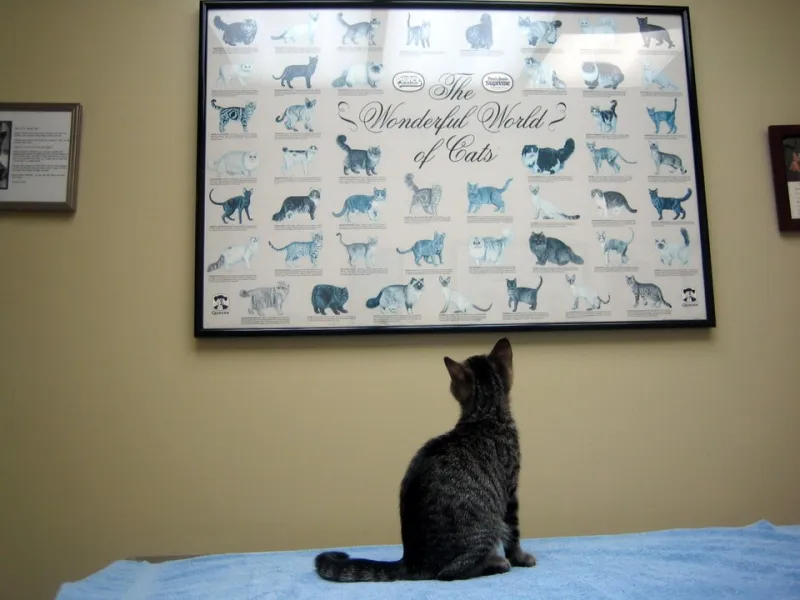
Photo: Sugar Booger, CC BY 2.0, via Wikimedia Commons
Let's set the scene. You've just adopted the most adorable, low-rider feline on the planet. Your Munchkin cat — let's call him Gerald — struts into your living room like he owns the place (he does), surveys his new kingdom, and immediately attempts to leap onto the brand-new, five-platform cat tree you spent $89 on. Gerald launches. Gerald does not make it. Gerald stares at the second platform from three inches below it with an expression that can only be described as deeply unimpressed.
Welcome to the Munchkin furniture crisis. Population: every single short-legged cat owner in America.
The Problem Nobody Warned You About
Munchkin cats are, by now, famous for their cartoonishly short legs — the result of a naturally occurring genetic mutation that affects limb length but leaves everything else (personality, chaos capacity, dramatic flair) completely intact. What breeders and adoption counselors sometimes forget to mention is that standard pet furniture was designed with a very different cat in mind. A cat with, you know, legs.
The average cat tree assumes a jumping height that a Munchkin simply cannot replicate. Standard litter boxes have entry walls so tall that some Munchkins have to practically pole-vault their way inside. Food and water bowls sit at heights engineered for cats whose chins aren't six inches from the ground. It's a whole ergonomic disaster, and the pet industry is — how do we put this politely — not exactly sprinting to fix it.
"I bought what the pet store employee called a 'beginner' cat tree," recalls Tamara, a Munchkin owner from Austin, Texas. "My cat Biscuit looked at the first platform, looked at me, and then went and sat inside a cardboard box I'd left on the floor. She lived in that box for two weeks. I think she was making a point."
She was, Tamara. She absolutely was.
The Litter Box Situation (A Comedy in Three Acts)
If cat trees are a mild inconvenience, litter boxes are a full-blown civil rights issue for Munchkin cats. Many standard litter boxes — especially the covered, top-entry varieties that became trendy for their odor control — might as well be obstacle courses for a cat with four-inch legs.
Top-entry litter boxes require a vertical jump that some Munchkins flat-out refuse to perform. High-sided boxes, designed to contain enthusiastic diggers, can trap a Munchkin mid-exit like a tiny, furry escape room participant. And don't even get started on the automatic self-cleaning models, which have been known to bewilder Munchkins so thoroughly that owners report their cats sitting outside the unit, watching it rotate, as if witnessing dark magic.
The fix here is actually pretty simple: low-entry litter boxes. Look for boxes with a cutout entry point on one side, ideally no higher than three to four inches off the ground. Several brands now make these specifically for senior cats and kittens, and they work beautifully for Munchkins too. Petmate and Van Ness both offer affordable options. If you're already committed to a high-sided box, a quick DIY solution is to cut a low entry arch into one side with a box cutter — just sand the edges smooth so nobody gets a surprise scratch.
Cat Trees: Think Ramps, Not Rockets
The cat tree redesign is where Munchkin owners have gotten genuinely creative, and honestly, some of these solutions deserve a spot on HGTV.
The core principle is simple: ramps over jumps. Rather than stacked platforms that require vertical leaping, the ideal Munchkin cat tree features a gradual ramp or staircase structure that lets your little dude saunter up to elevated territory without requiring a running start and a prayer. Several Etsy sellers have cornered this market beautifully, offering custom-built cat furniture with gentle inclines, wide platforms, and enough carpet coverage to keep tiny claws happy.
For the budget-conscious, a popular DIY approach involves repurposing wooden step stools or small bookshelves with carpet tape applied to each level. Stack them in a staircase configuration against a wall, anchor them securely (this part is non-negotiable — Munchkins are heavier than they look), and you've got a custom climbing structure for under $40.
"I built mine out of IKEA KALLAX shelving units and carpet remnants from Home Depot," says Derek, a Munchkin dad from Chicago whose cat, Noodle, now has a three-level penthouse situation in the corner of the living room. "Noodle uses it every single day. My regular cat ignores it completely and sleeps on my laptop. So. Mixed results overall."
Food and Water: The Forgotten Frontier
Here's one that doesn't get nearly enough attention: bowl height. Most elevated pet feeders are designed to raise bowls off the ground for larger dogs or cats — but for Munchkins, eating at ground level is actually fine and often preferable. What matters more is the bowl's width and depth. Deep, narrow bowls force Munchkins to crane their necks awkwardly, which can cause discomfort over time. Wide, shallow bowls — sometimes marketed as "whisker-friendly" bowls — are a much better fit for their facial structure and short stature.
Same goes for water fountains. The tall, tower-style fountains that look gorgeous on Instagram? Your Munchkin may struggle to reach the stream comfortably. Opt for a wide, low-profile fountain instead. The Pioneer Pet Raindrop fountain is a fan favorite in the Munchkin community for exactly this reason.
What the Pet Industry Needs to Do (Yesterday)
Let's be honest: the mainstream pet furniture market has been slow to acknowledge that dwarf cat breeds — Munchkins, Napoleons, Lambkins — exist in meaningful numbers and have specific needs. The "one size fits all cats" approach is a myth, and it's costing owners real money when they buy equipment their cats can't or won't use.
A handful of smaller, specialty brands are starting to fill the gap. Catastrophic Creations makes modular wall-mounted cat furniture that owners can configure at any height. The Refined Feline offers sleek, low-profile designs. And the custom pet furniture market on Etsy has genuinely exploded with Munchkin-aware sellers who know their audience.
But until big-box pet retailers start stocking "Munchkin-friendly" labels alongside their regular inventory, owners are largely on their own — which, based on the ingenuity we've seen, they're handling with remarkable creativity and only moderate amounts of frustrated swearing.
The Bottom Line
Furnishing a home for a Munchkin cat isn't complicated once you understand the core principle: low, wide, and ramp-accessible beats tall, narrow, and jump-required every single time. Your Munchkin doesn't need less enrichment than a long-legged cat — they need the same enrichment, re-engineered for their magnificent little bodies.
Gerald, by the way, eventually got a custom ramp-style cat tree and now spends approximately 70% of his waking hours on the top platform, looking down at everything with an expression of profound satisfaction.
As it should be. The king deserves a proper throne. Even if it took three trips to Home Depot and a YouTube tutorial to build it.