Who Made These Rules Anyway? How Munchkin Cats Are Gleefully Ignoring the Feline Rulebook
There's an unwritten contract between cats and humans. Cats agree to be beautiful and mysterious. Humans agree to worship them from a respectful distance. Eye contact is minimal. Cuddling happens strictly on the cat's terms. And under no circumstances does any self-respecting feline come when called, play fetch voluntarily, or greet a stranger at the door like an overenthusiastic golden retriever.
Munchkin cats did not sign this contract.
In fact, if you showed a munchkin cat that contract, it would probably knock it off the table, sit on it, and then trot over to your houseguest to demand chin scratches. These compact, short-legged furballs are rewriting the playbook on feline behavior — and the cat community hasn't quite recovered.
The Myth of the Aloof Cat (And Why Munchkins Find It Hilarious)
Ask anyone who doesn't own a cat to describe one, and you'll get some variation of: "independent," "a little mean," or "basically a tiny lion who tolerates your presence." That reputation isn't entirely unearned. Plenty of cats have built their whole personality around strategic indifference.
Munchkins, however, seem to have missed that memo entirely.
Owners across the country consistently describe their munchkins as interactive — a word you don't often hear applied to cats without a slight note of surprise. Jessica R., a munchkin owner from Austin, Texas, put it this way: "My munchkin, Biscuit, follows me from room to room like a shadow. A very fluffy, very low-to-the-ground shadow. I've never felt so supervised in my own home."
This sociability isn't just anecdotal. Munchkin cats are widely noted by breeders and feline behaviorists for their people-oriented temperament. They tend to enjoy company — human or otherwise — and many adapt remarkably well to multi-pet households, including dogs. That's not typical cat behavior. That's practically diplomatic.
Floor Level Is a Lifestyle, Not a Limitation
Here's where the munchkin's unique physiology starts to get genuinely fascinating. Those famously short legs — the result of a natural genetic mutation affecting long bone development — don't just change how a munchkin looks. They change how a munchkin experiences the world.
Traditional cats are vertical creatures. They climb, they perch, they survey their kingdoms from on high. A standard cat on top of the refrigerator is basically living out its apex predator fantasy. Munchkins, by contrast, are horizontal specialists. They've built their entire worldview from a lower vantage point, and rather than finding this limiting, they've turned it into a whole personality.
Dr. Lydia Hartwell, a veterinary behaviorist based in Chicago, explains it this way: "When an animal's physical capabilities shift, their behavioral strategies shift with them. Munchkins often compensate for reduced vertical mobility with increased lateral exploration and heightened social bonding. They interact more with their environment at ground level and tend to be more tactile with their humans as a result."
In plain English: your munchkin can't reach the top shelf, so it's decided you are the most interesting thing in the room. Congratulations on your promotion.
The Surprisingly Athletic Tiny Athlete
Before you feel too sorry for the munchkin's altitude situation, let's be clear: these cats are not sitting around feeling bad about their legs. Not even a little.
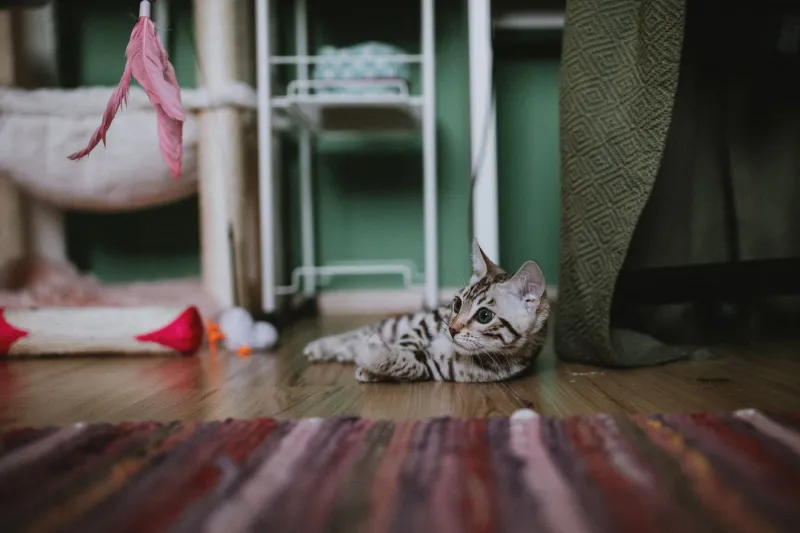
Munchkins run fast. Like, embarrassingly fast for something with the proportions of a furry cocktail sausage. Their low center of gravity gives them a surprisingly stable, agile base, and many owners report that their munchkins tear around the house with a kind of frantic, turbo-charged energy that defies all logic.
And the climbing thing? They haven't given up on it. They've just gotten creative.
Rather than leaping straight up, munchkins tend to problem-solve their way to higher ground — using furniture like staircases, finding intermediate surfaces, and occasionally just staring at something tall long enough that a human feels guilty and picks them up. This resourcefulness is, experts suggest, a marker of genuine intelligence.
"Munchkins show strong problem-solving tendencies," notes Hartwell. "They're curious, persistent, and they figure things out. The physical challenge seems to encourage cognitive engagement rather than discouraging it."
Basically, the munchkin looked at its situation and thought: I'll find another way. If that's not a metaphor for something, we don't know what is.
Fetch, Tag, and Other Games Cats Aren't Supposed to Play
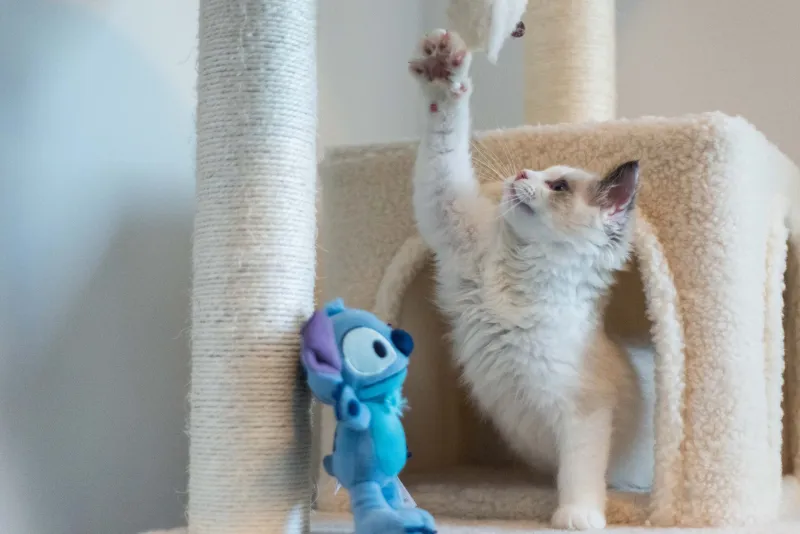
Here's a behavior that will make traditional cat people absolutely lose their minds: munchkins frequently play fetch.
Not all of them, and not always reliably — this is still a cat, after all, and consistency is not really on the menu. But the number of munchkin owners who report their cats bringing toys back for another throw is statistically significant enough to raise eyebrows. Tom M. from Portland, Oregon, shared this gem: "My munchkin, Dumpling, will bring me her little crinkle ball, drop it at my feet, and wait. If I don't throw it fast enough, she makes this tiny chirping noise. I have been trained by a cat who is eight inches tall."
This kind of interactive, reciprocal play is more commonly associated with dogs — or with cats who have decided, for reasons known only to them, that they want to be a dog today. For munchkins, it seems to be a genuine behavioral tendency, possibly linked to their higher-than-average desire for social engagement.
The Emotional Support Animal Nobody Asked For
One of the most unexpected things munchkin owners report is how emotionally tuned in these cats seem to be. Stories abound of munchkins curling up next to a sick or upset human with an almost deliberate intentionality — not just occupying the same couch, but actively seeking out the person who seems to need company.
Sarah K. from Nashville described coming home after a brutal week at work and finding her munchkin, Pretzel, waiting at the door. "He didn't just meow and walk away like my old cat used to. He followed me to the couch, climbed up next to me, and just... sat there. For two hours. Like a tiny, purring therapist."
Whether this represents genuine emotional intelligence or just a very sophisticated strategy for securing lap time is, frankly, impossible to determine. Either way, the effect is the same: munchkin owners feel seen.
The Verdict: Rule-Breaker or Just Misunderstood?
So are munchkin cats actually different, behaviorally speaking? Or have we just been operating with too narrow a definition of what a cat is supposed to be?
Probably a little of both.
Munchkins do appear to skew more social, more interactive, and more engaged with their humans than many other breeds. Their physiology shapes their behavior in real and measurable ways. And their refusal to be limited by expectations — physical or otherwise — is genuinely remarkable.
But maybe the bigger takeaway is this: cats have always been more varied, more surprising, and more emotionally complex than the "aloof and uninterested" stereotype gives them credit for. Munchkins just make that point loudly, adorably, and from approximately ankle height.
The rulebook was always a suggestion. The munchkin just had the audacity to say so out loud.
Have a munchkin who refuses to follow the rules? Tell us about their most ridiculous behavioral quirk in the comments — we promise we won't judge. (We will absolutely judge, with great affection.)