Pocket-Sized and Perpetually Wired: The Shocking Truth About Munchkin Cat Energy Levels
Picture this: It's midnight. You've got work tomorrow. You've already hit snooze on your phone three times as a preemptive measure. And somewhere in the darkness of your apartment, a small, low-slung creature is doing what can only be described as a NASCAR lap around your living room furniture — at full speed, with zero remorse.
Welcome to life with a munchkin cat.
If you own one of these adorable little goblins, you already know the truth that prospective owners simply cannot comprehend until it's too late: munchkins are not the chill, decorative lap cats their tiny frames suggest. They are, in fact, high-octane chaos agents wearing an extremely cute disguise.
Wait — Shouldn't Short Legs Mean Slower Cat?
Logically, it makes sense to assume that a cat with legs roughly the length of a chapstick tube would be, well, a little more chill than your average feline. Less leg, less speed, less mayhem. Right?
Absolutely not.
Munchkin cats carry the same core energy blueprint as any other domestic cat. Their short limbs are the result of a naturally occurring genetic mutation affecting the long bones of the legs — but that mutation has zero effect on their cardiovascular capacity, their muscle density, or their deeply personal vendetta against your peace and quiet.
In fact, many munchkin owners will tell you their cats seem to compensate for the shorter stride with more effort. Think of it like watching a Corgi sprint across a dog park — those little legs are moving at an almost comical frequency, and somehow, inexplicably, they're keeping up with everyone else. Munchkins operate on the same principle. They're not slow. They're just differently fast.
Veterinarians and feline behaviorists note that munchkins tend to retain a kitten-like playfulness well into adulthood — longer than many other breeds. So that zoomie phase you thought would end around year one? Buckle up, friend.
The Midnight Zoomies: A Love Story
Every munchkin owner has a story. Mine involves a 3 a.m. thunderstorm, a knocked-over glass of water, and a very smug short-legged suspect who absolutely knew what he did.
The infamous "zoomies" — known in fancier circles as Frenetic Random Activity Periods, or FRAPs — are common in cats generally, but munchkins seem to have elevated them to a performance art form. These bursts of seemingly random, high-speed activity are your cat's way of releasing pent-up energy, processing stimulation, or simply announcing to the universe that they exist and they are thriving.
The problem is timing. Cats are naturally crepuscular, meaning they're hardwired to be most active at dawn and dusk. In an apartment setting with artificial lighting and a human who works a 9-to-5, that biological rhythm gets a little scrambled — and suddenly, your munchkin is scheduling their cardio routine for whenever is least convenient for you.
Why Enrichment Isn't Optional — It's Survival
Here's the deal: a bored munchkin is a destructive munchkin. Without adequate mental and physical stimulation, these cats will find their own entertainment. And their entertainment preferences tend to include things like unrolling every toilet paper roll in the house, relocating your hair ties to unknown dimensions, and launching themselves off your laptop keyboard at the exact moment you're on an important Zoom call.
Enrichment isn't just a nice-to-have. For a munchkin, it's basically a public safety measure.
The good news? You don't need a massive house or an elaborate cat jungle to keep them satisfied. You just need to be creative — and maybe slightly sneaky.
Enrichment Ideas That Actually Work (Tested on Real Munchkins)
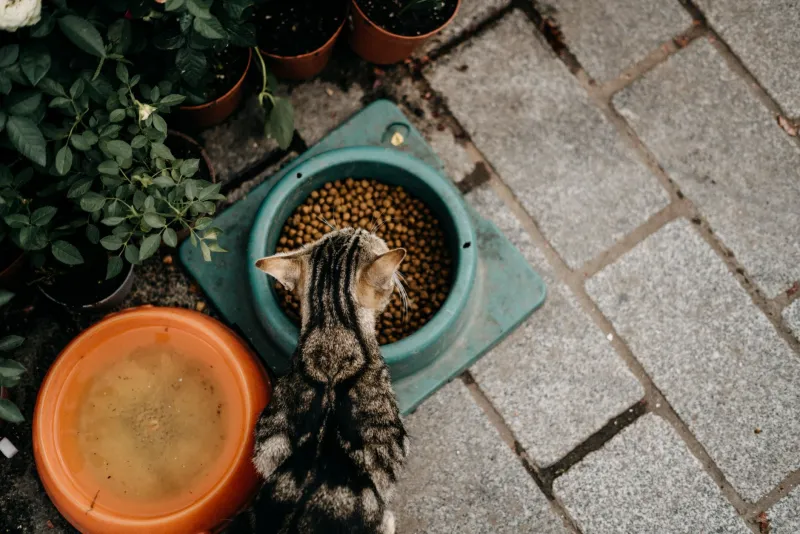
The Puzzle Feeder Hustle Swap out your munchkin's regular food bowl for a puzzle feeder or a slow-feed toy. Not only does this extend mealtime and engage their brain, it also taps into their natural hunting instincts. Watching a munchkin figure out a puzzle feeder is genuinely one of the funniest and most satisfying things you'll witness as a cat parent — it's equal parts concentration and indignation.
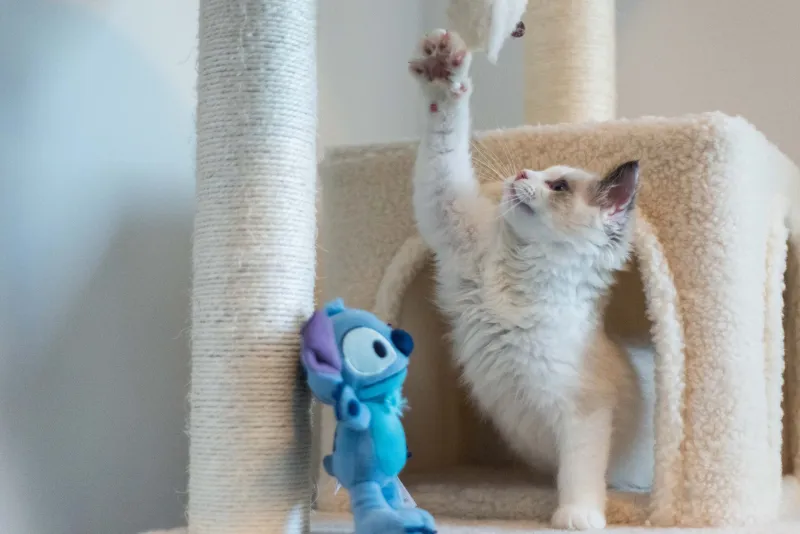
Wand Toy Intervals Schedule two dedicated play sessions per day — one in the morning and one about an hour before you want them to settle down for the night. A feather wand or a crinkle toy on a string is basically a munchkin's version of a treadmill. Ten to fifteen minutes of active chasing can do more to curb the midnight zoomies than anything else in your arsenal. Pro tip: let them "catch" the toy at the end. It satisfies the predatory sequence and prevents frustration.
The Paper Bag Trap Leave a paper grocery bag on the floor (handles removed for safety, please). Your munchkin will discover it, investigate it, launch themselves into it, wrestle it, and somehow emerge looking both victorious and confused. It costs you nothing and buys you approximately forty-five minutes of supervised entertainment.
Window TV: The Free Streaming Service Install a bird feeder outside a window your cat can access. This is, without exaggeration, the Netflix of cat enrichment. Munchkins will park themselves in front of that window and chatter, chirp, and stare with the intensity of a true crime documentary fan during a season finale. Bonus: it's free, it's renewable, and it does not require you to participate in any way.
Cat Tunnels and Cardboard Castles Munchkins are low to the ground by nature, which means they have a particular affinity for tunnels, boxes, and enclosed spaces. A collapsible cat tunnel from any major pet retailer (Chewy, PetSmart, Amazon — take your pick) will get more use than you'd expect. Stack a few cardboard boxes with cut-out holes and you've essentially built a munchkin theme park for the price of your last Amazon delivery.
The Rotation Method Here's a trick that experienced cat owners swear by: rotate your cat's toys. Instead of leaving every toy out all the time, keep a selection in a box and swap them out every few days. Cats habituate to familiar objects quickly, but a toy that's been "missing" for a week suddenly becomes the most thrilling thing in the known universe. It's the same psychology that makes a cardboard box more exciting than the expensive cat tree you bought — novelty is everything.
Knowing When Enough Is Enough
A well-stimulated munchkin will still have energy. That's just who they are. But there's a meaningful difference between a cat that's doing healthy, happy zoomies after a good play session and a cat that's bouncing off the walls out of boredom and frustration.
If your munchkin is showing signs of destructive behavior, excessive vocalization, or seems unable to settle even after play, it might be worth a conversation with your vet. Sometimes anxiety or underlying health issues can look a lot like hyperactivity, and it's always better to rule those out.
But most of the time? Your munchkin is just being a munchkin. A tiny, relentless, deeply lovable force of nature in a suspiciously small package.
And honestly? Life is a lot more interesting with them in it — even at 3 a.m.
Got a munchkin with a particularly unhinged energy level? Drop your best chaos story in the comments. We want to hear everything.